
Routly
Connecting people,
routes, and interactions.
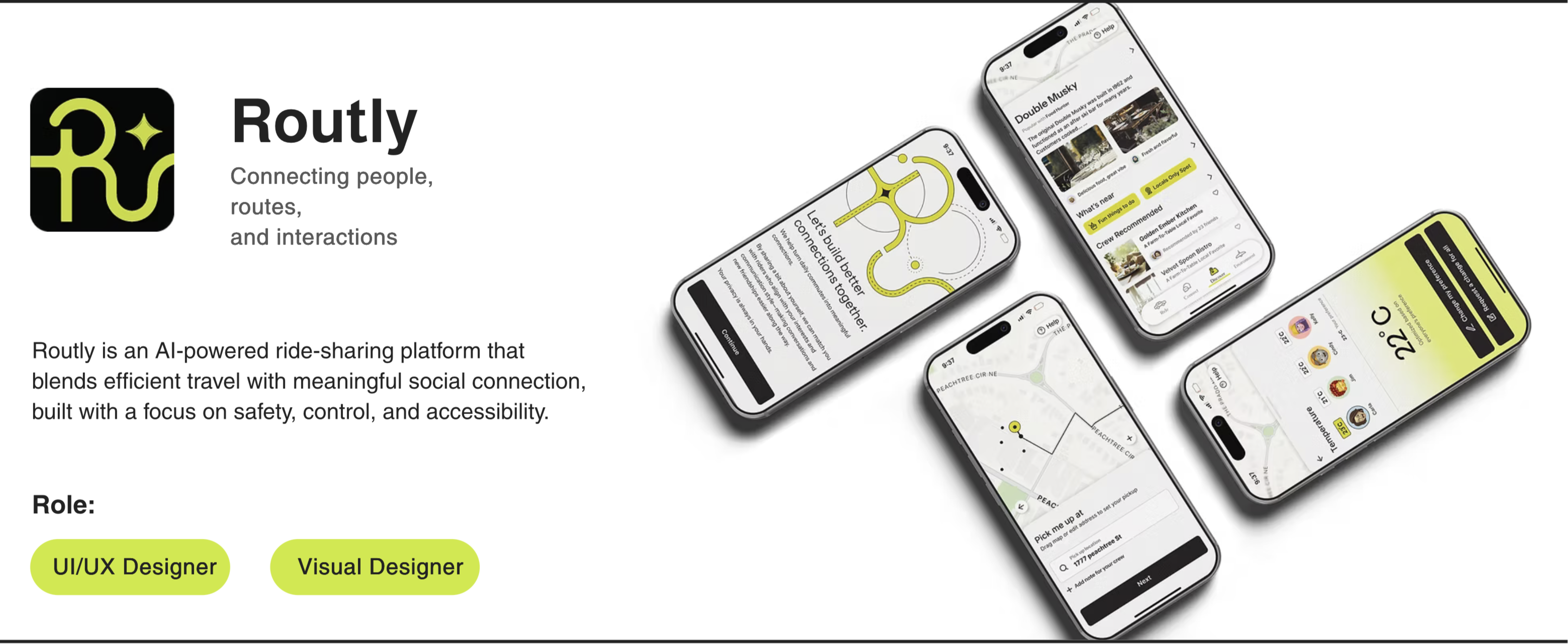
Routly is an AI-powered ride-sharing platform that blends efficient travel with meaningful social connection, built with a focus on safety, control, and accessibility.
01 / overview
Connecting people, routes, and interactions
Routly is an AI-powered ride-sharing concept that brings efficient travel and meaningful social connection together. My roles span UI/UX design and visual design, with safety, accessibility, and rider control guiding the experience.
02 / problem
A journey can be more than a destination
Transportation typically prioritizes speed, cost, and individual convenience. Routly explores a different question: how can a shared ride create opportunities for connection without making social interaction feel compulsory?
The opportunity
Daily commutes are a frequent, underused setting for human connection. Riders need the freedom to move between solitude, quiet coexistence, and active engagement.
How might we
How might we design a shared mobility system that enables meaningful, low-friction social interaction while preserving user autonomy, safety, and comfort?
03 / research
From mobility systems to social behavior
The research moved from structural changes in transportation to the conditions that make people comfortable interacting during a ride.
Phase 1 · Systems-level research
32 academic and industry sources; PESTEL analysis across 100+ sources; a survey with 216 respondents; 11 expert interviews; 28 user interviews; and synthesis of 1,300+ data points.
Phase 2 · Social behavior
4 expert interviews, 5 Gen Z user interviews, a mobility preference survey with 14 respondents, and a social preference survey with 15 respondents.
Context shaping the opportunity
The original research explored declining interest in private car ownership, sustainable mobility, social connection, and safety and affordability barriers.
04 / insights
Connection works best when it stays optional
The research points toward adaptable social environments rather than one fixed way to share a ride.
Let riders choose their level of engagement
Social preferences change with context. Quiet, passive coexistence, and active conversation all need to be valid choices.
Start with common ground
Shared interests, destinations, events, and neighborhoods provide natural entry points for conversation.
Make interaction organic
Subtle prompts and optional engagement are preferable to scripted experiences or intrusive nudges.
Build comfort before connection
Trust, physical safety, and protection from social pressure are foundational. Fluid, interest-based communities also support the research theme of “modular belonging.”
05 / solution
A shared ride, shaped around its riders
The proposed robotaxi platform uses contextual AI matching to consider social compatibility alongside route efficiency.
User-controlled sociality
Engagement is adjustable and reversible. Riders can choose to connect or stay quiet.
Context-aware matching
Routes, interests, social preferences, and rider intent inform compatible ride groups.
Digital support for real interaction
Digital touchpoints facilitate conversation while leaving room for the physical experience.
Trust and safety
Rider autonomy and psychological comfort guide the matching and interaction design.
06 / journey
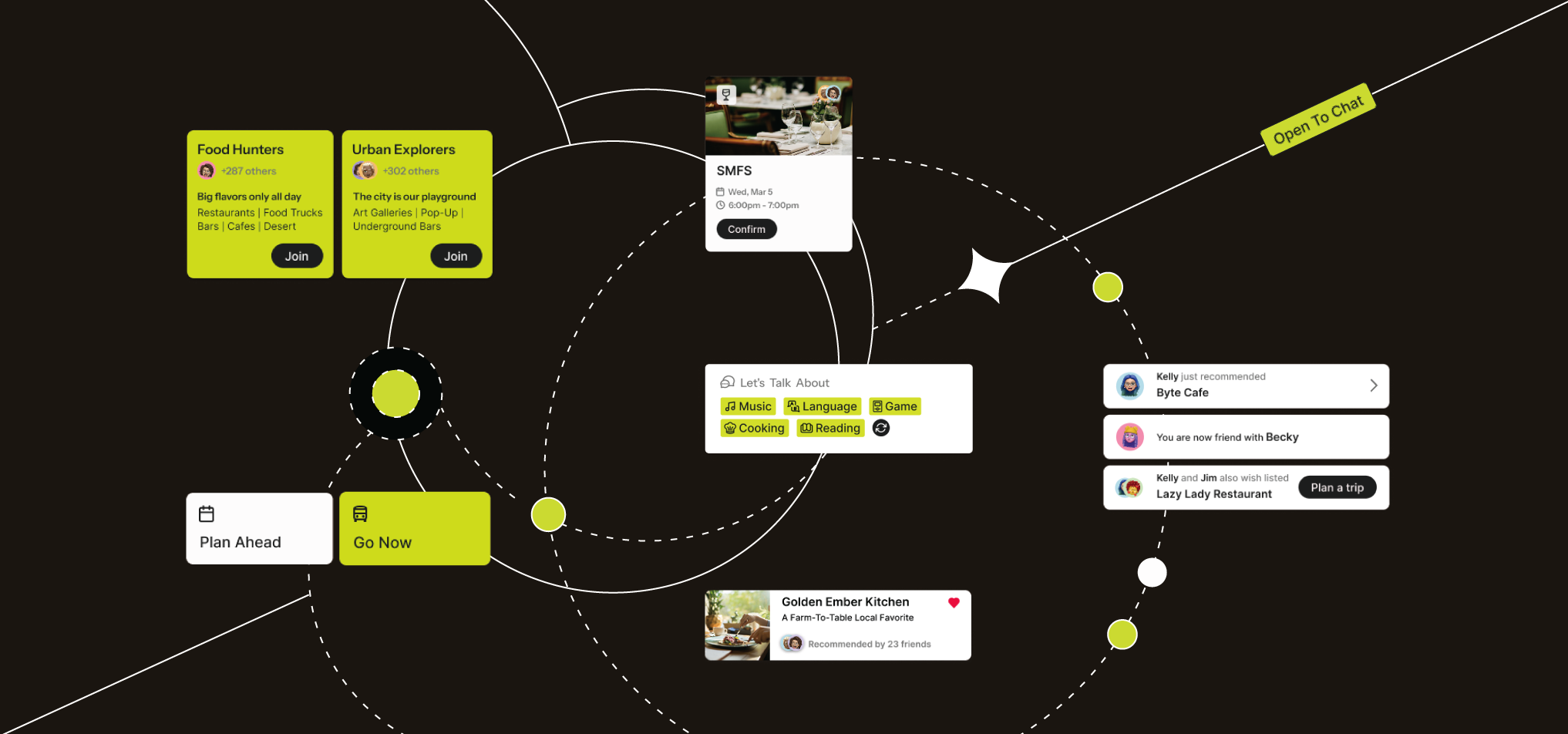
Before, during, and beyond the ride
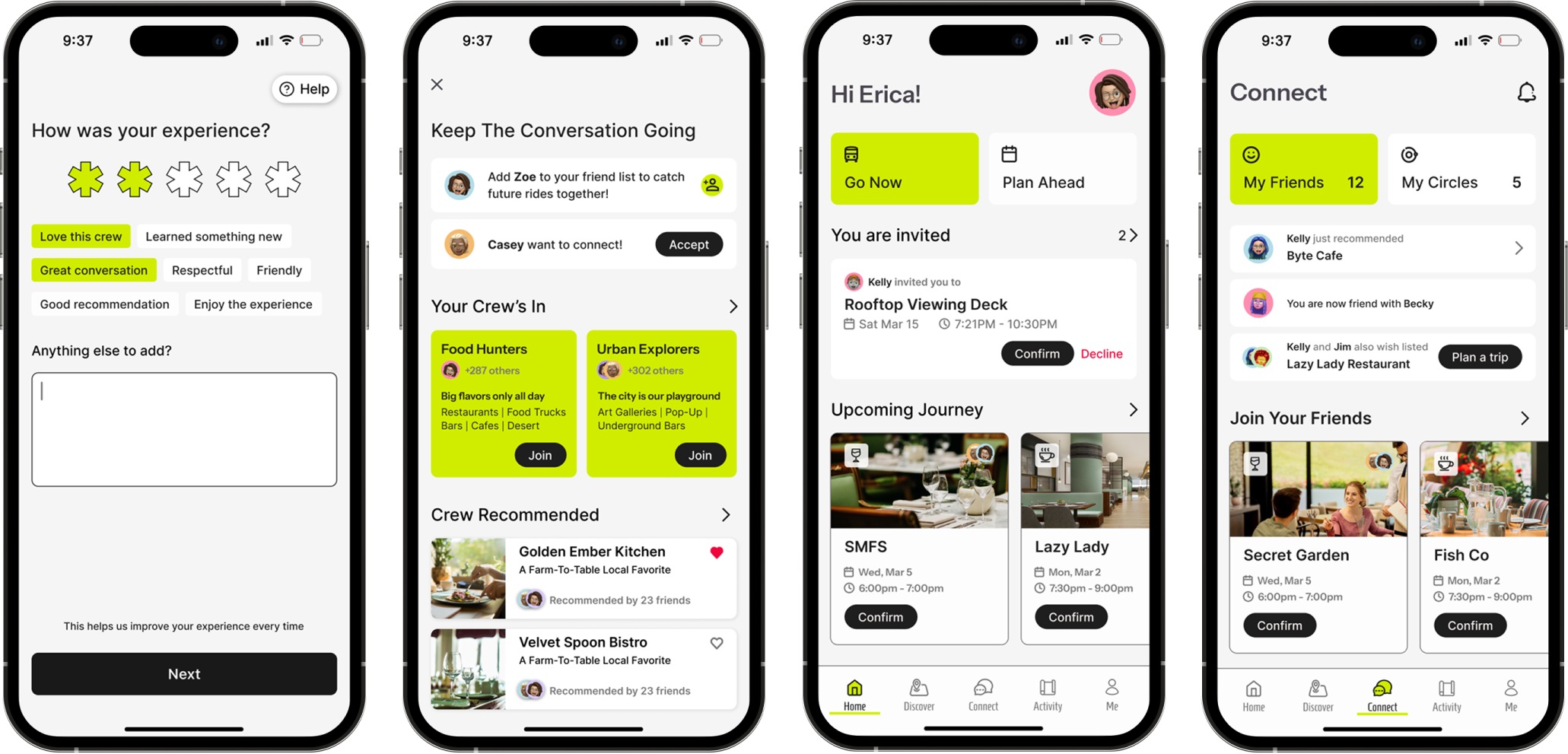
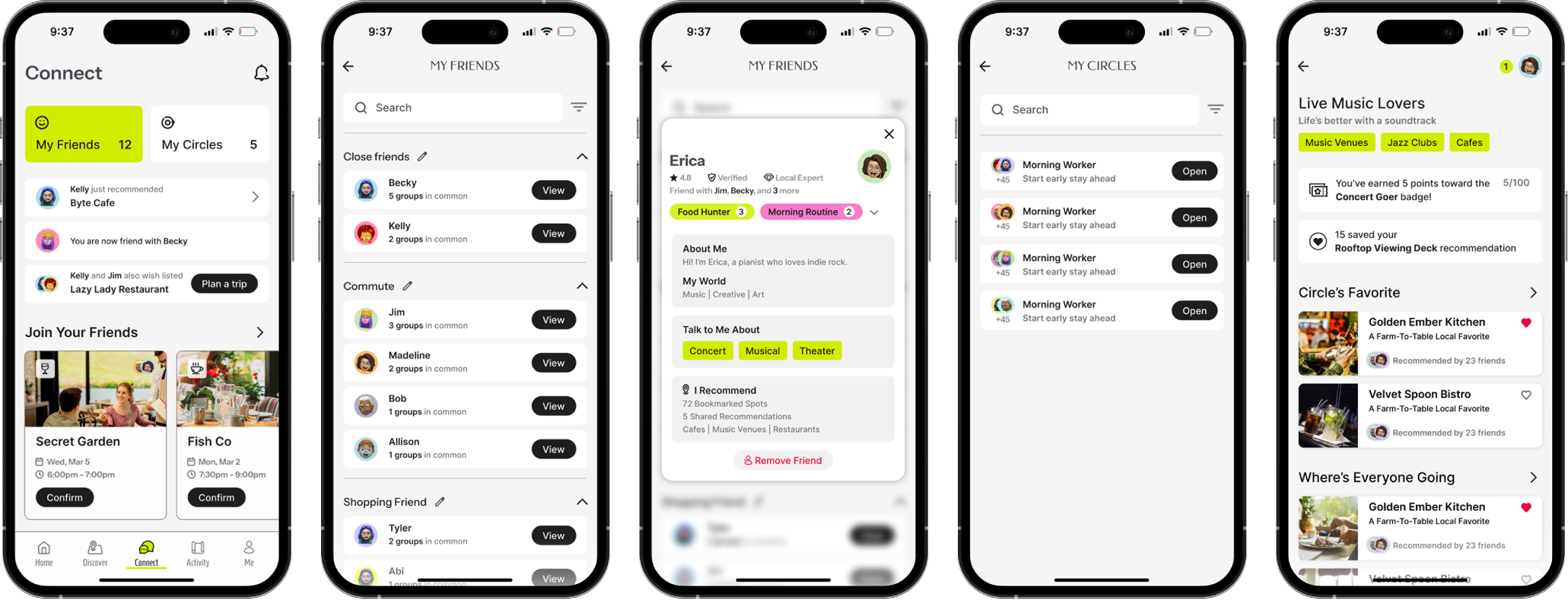
The experience connects a personal mobile app with a shared in-vehicle interface.
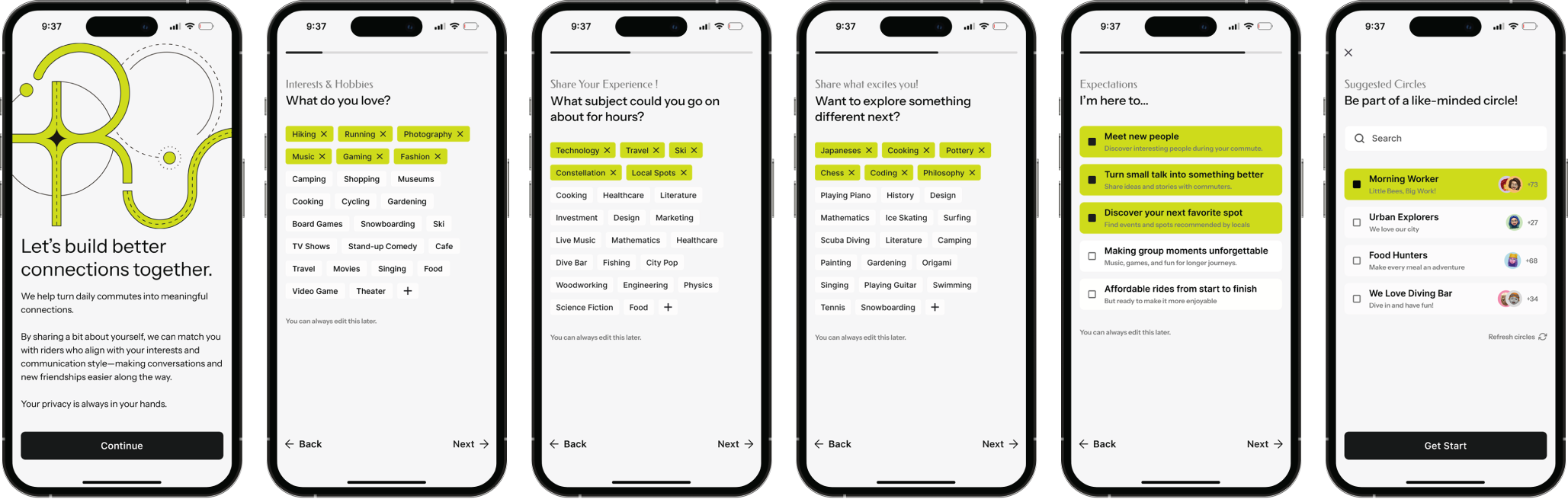
01 · Build a social profile
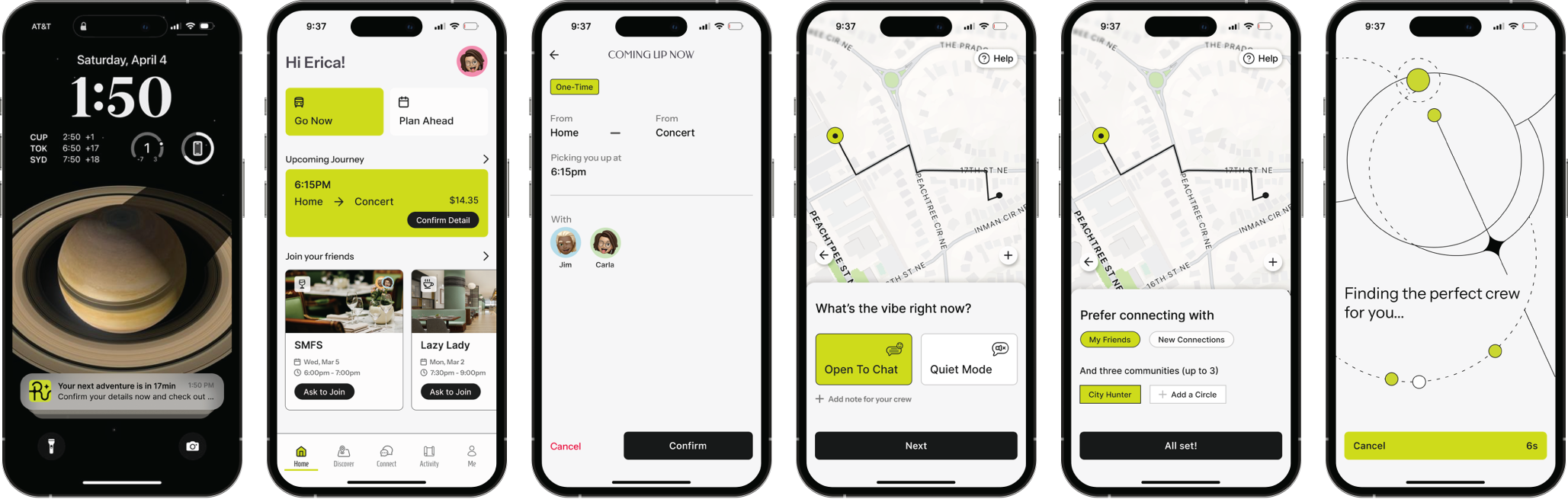
Onboarding captures interests, expertise, topics of curiosity, conversation style, and social intent, including networking, casual conversation, or quiet travel.
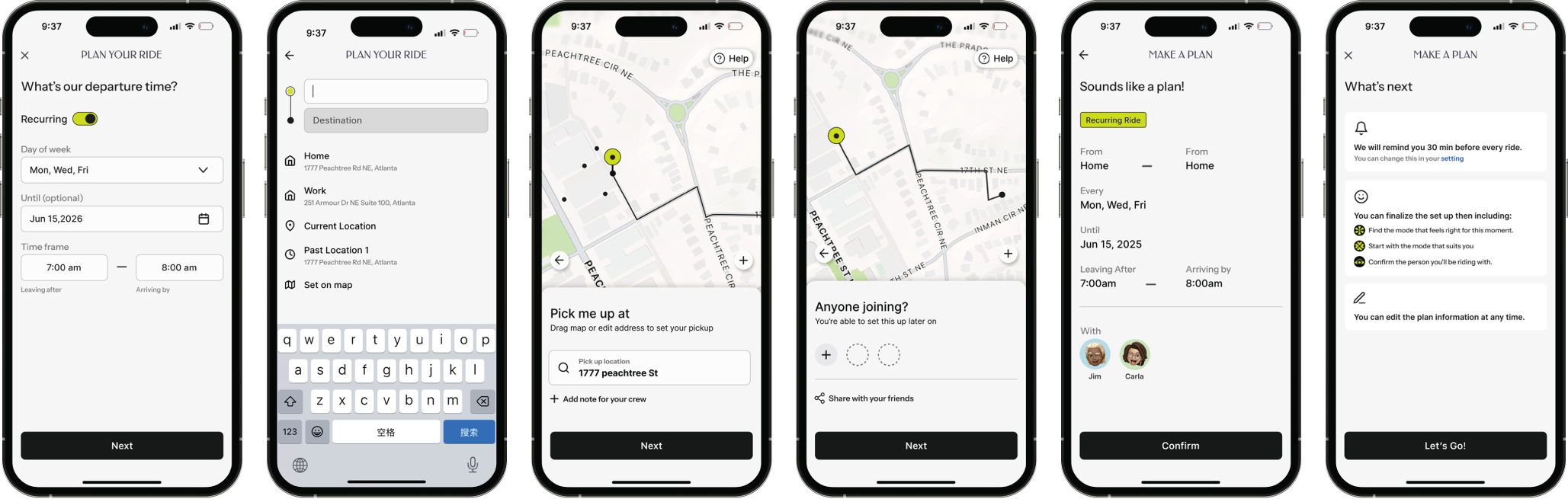
02 · Match and book
Recurring, scheduled, and on-demand rides combine route efficiency with social compatibility and network proximity. Riders choose social mode and a preference for familiar or new connections.
03 · Prepare for the ride
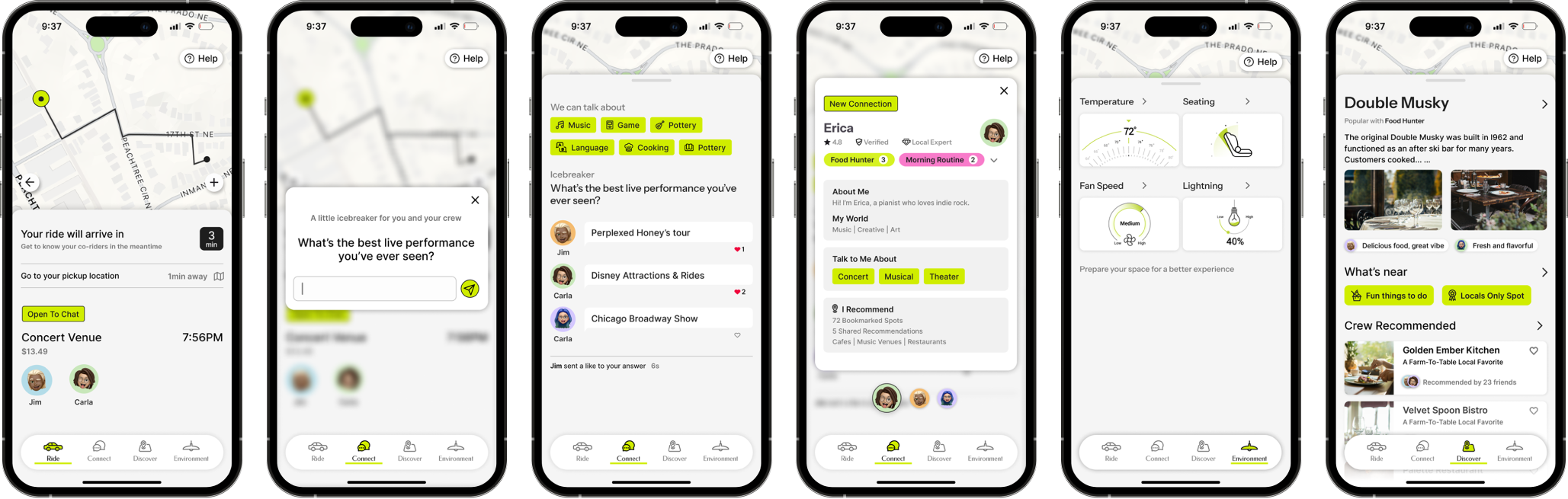
Lightweight co-rider profiles, shared context, optional conversation starters, and destination highlights reduce uncertainty before meeting.
04 · Connect in transit
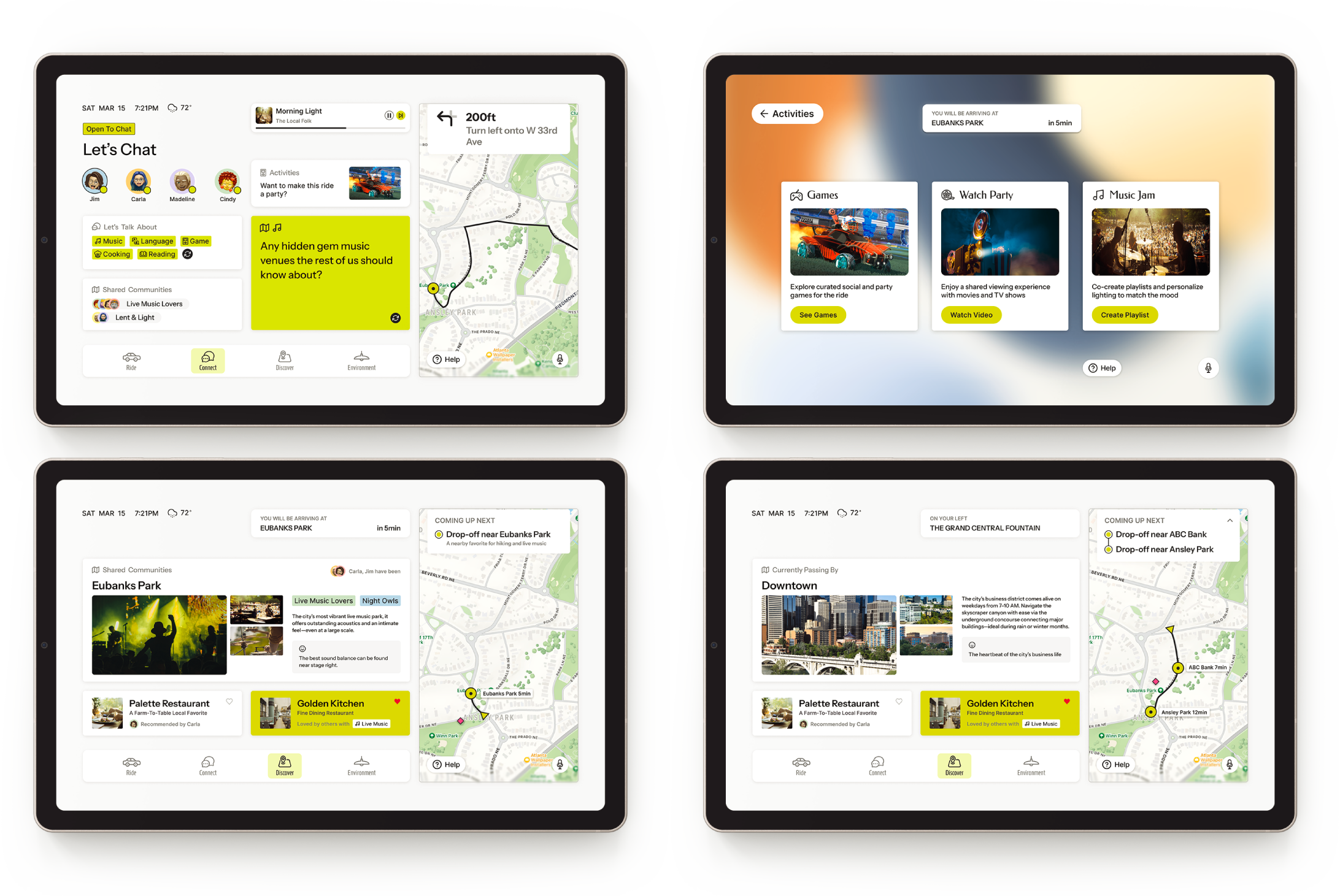
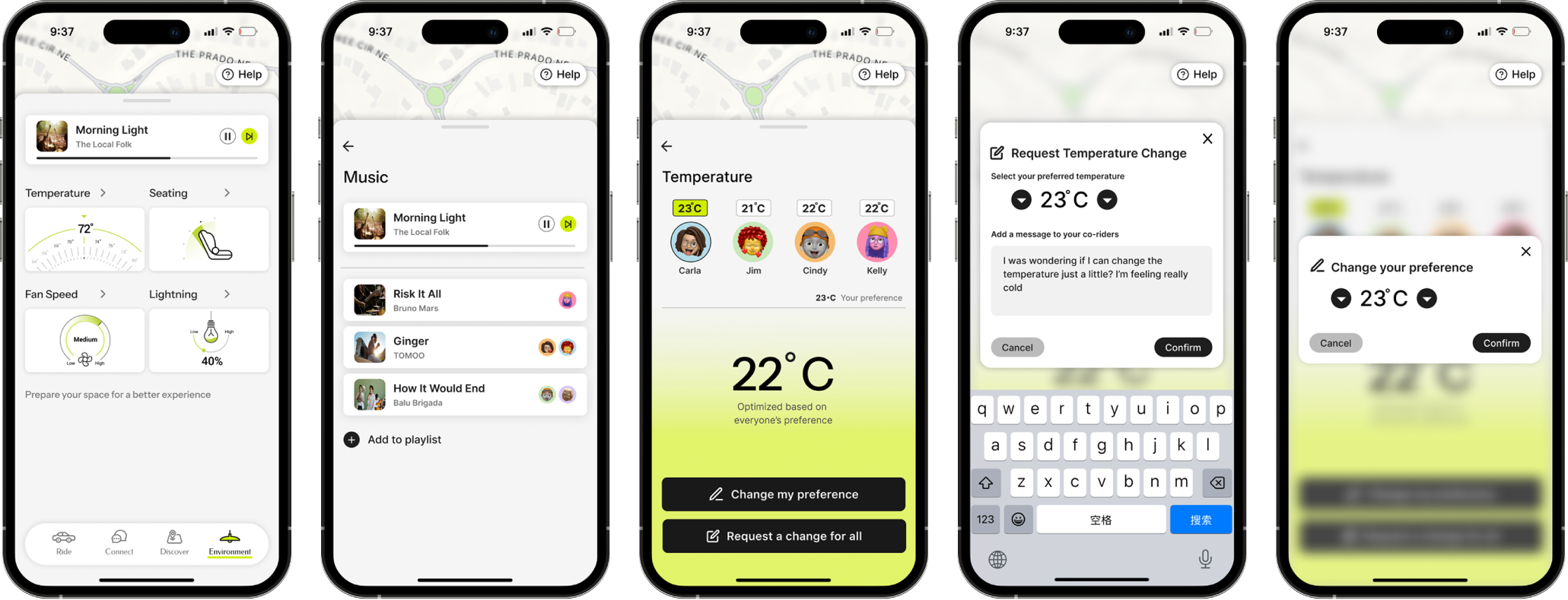
The shared interface offers common interests, contextual topics, location insights, and optional music, media, or games. Riders can adjust ambiance, express interest in topics, and save destinations.
05 · Continue after arrival
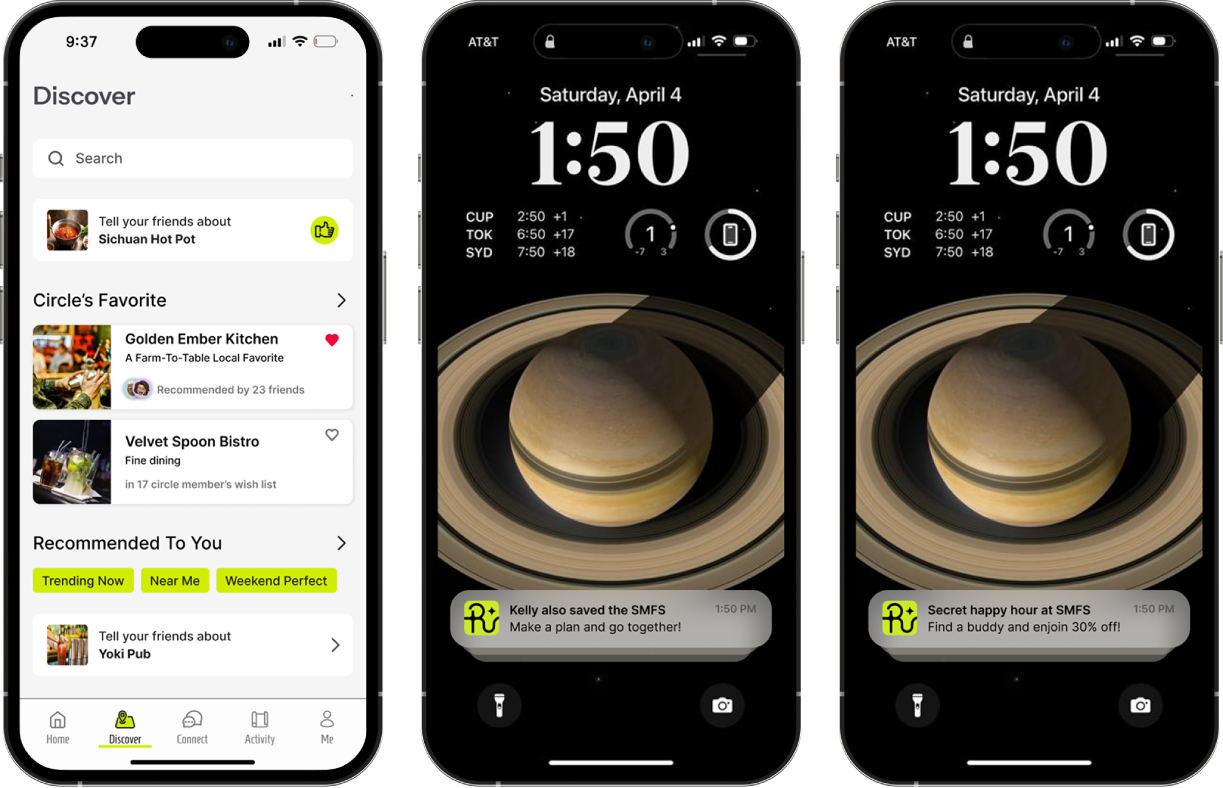
Save connections, join communities, and bookmark places. Interest-based groups, shared planning, and event discovery extend the value of a ride.
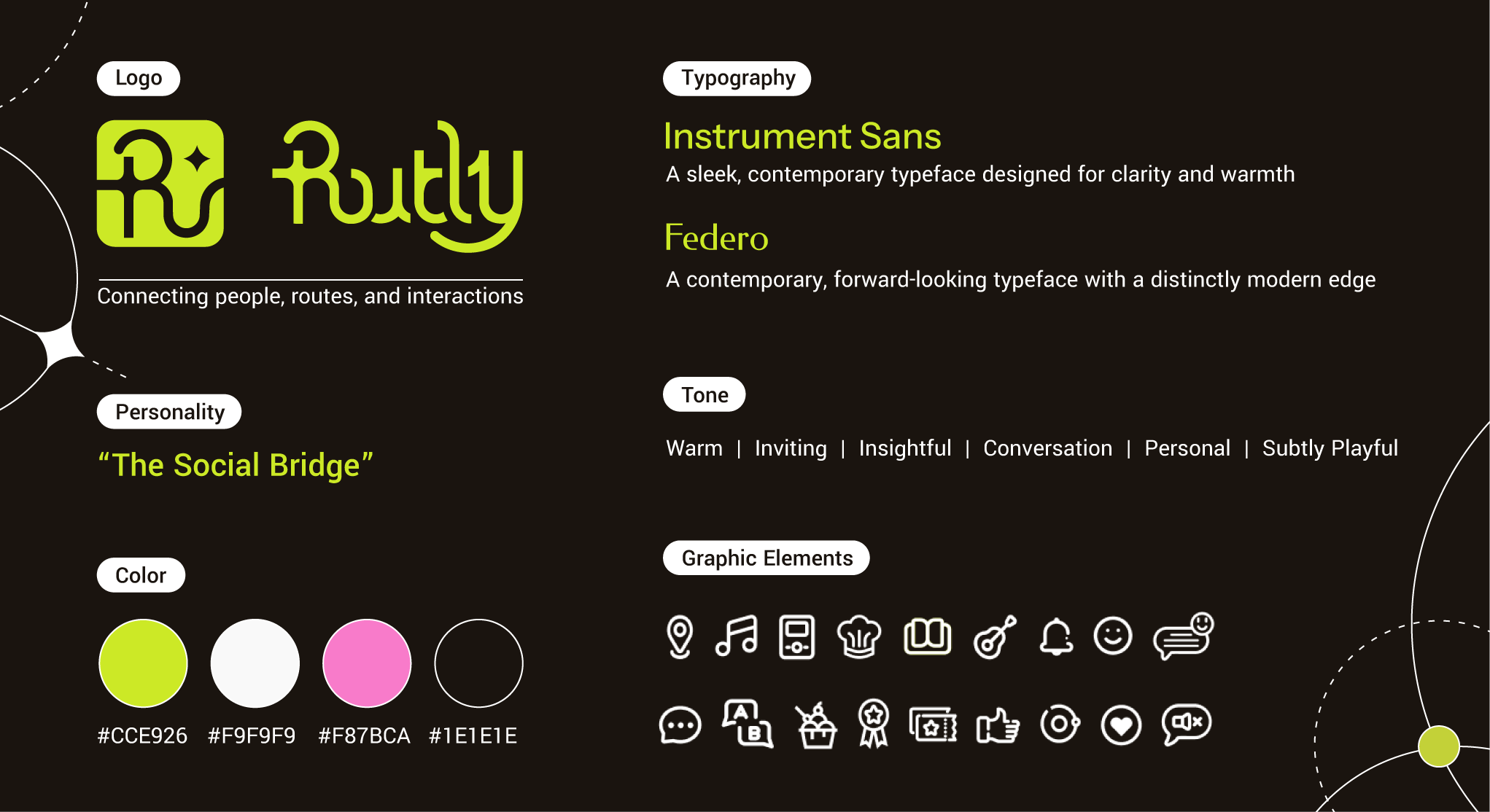
Visual identity
The brand system brings the mobile and in-vehicle experience together.
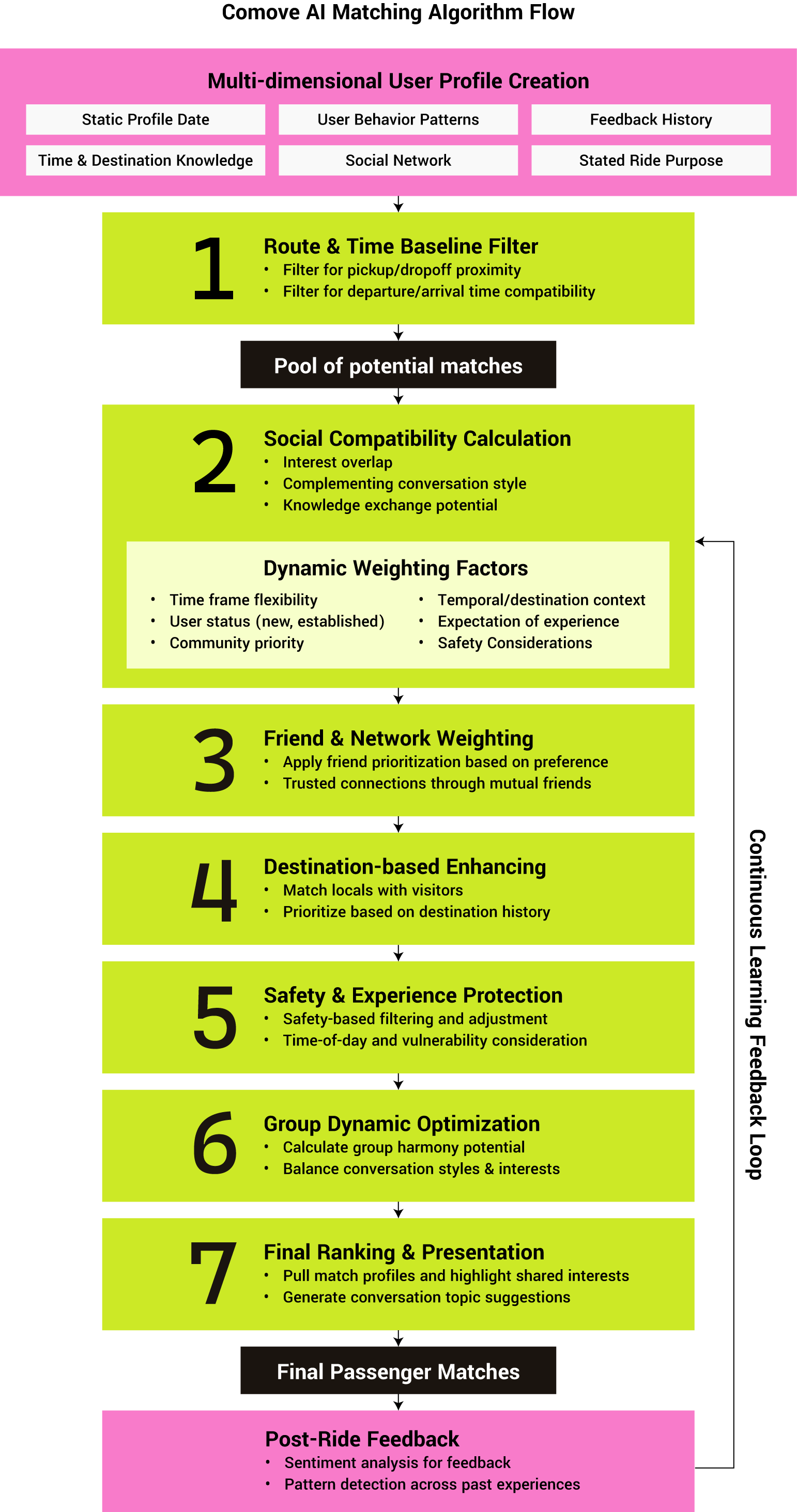
Intelligent matching
The matching flow connects rider preferences with a compatible shared journey.
07 / strategy
Designing an ecosystem that can grow
The business strategy considers repeat usage, fleet integration, and context-specific communities.
Pricing and retention
Demand- and context-based pricing, commuter subscriptions, and loyalty incentives.
Service integration
A consistent experience across vehicles and providers, supported by an integration framework for mobility partners and standardized hardware modules.
Partnership opportunities
Entertainment services, universities, employers, local businesses, and residential communities are proposed partners—not confirmed partnerships.
Community-led growth
Events, temporary communities, and seasonal campaigns create relevant reasons to share a ride.
08 / validation
Testing the concept with Gen Z
16 participants aged 19–25 across multiple cities evaluated scenario-based prototypes. The project recorded SUS, NPS, and qualitative feedback.
83.44 · System Usability Scale
Reported score from the prototype evaluation.
75 · Net Promoter Score
Reported score from the same concept validation.
Participant feedback
“Low risk, high chance of meeting great people.” — Student, 23. “Digital and physical blend seamlessly.” — Student, 24. “Highly appealing for younger users.” — UX Designer, 25.
What these results tell me
The prototype feedback is encouraging. These results describe a small concept evaluation, rather than production adoption or long-term behavior.
09 / reflection
Designing relationships, not only interfaces
Routly reframed the project around how people relate to one another during everyday travel.
Transportation as a social setting
The experience of a journey matters alongside the efficiency of reaching a destination.
Technology as a facilitator
Digital tools should support real-world interaction without taking over the moment.
Responsible matching
User control, safety, and transparency need to guide AI matching decisions.