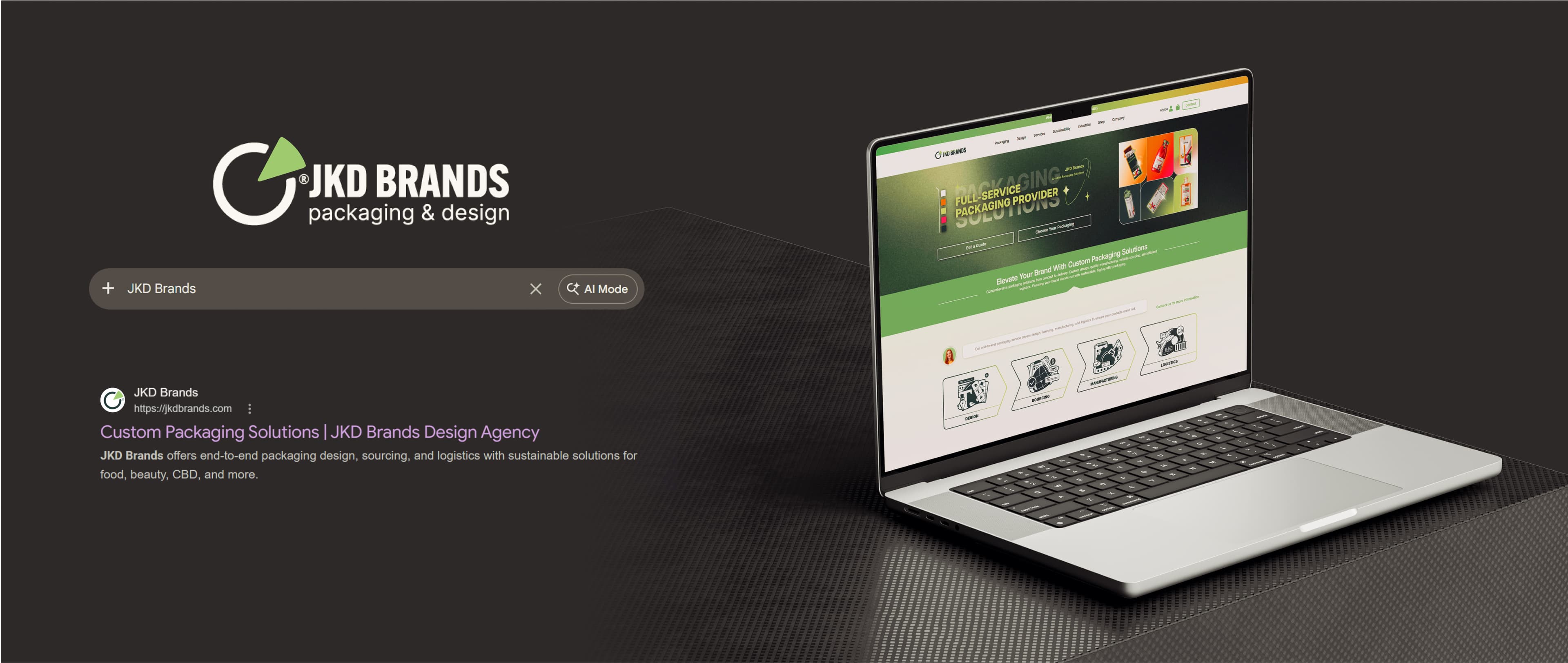
JKD Website
From product store
to service partner.
Rebranding & Digital Transformation: Shifting from E-Commerce to Service-Oriented B2B Platform
01 / JKD case study
Project overview & the pivot
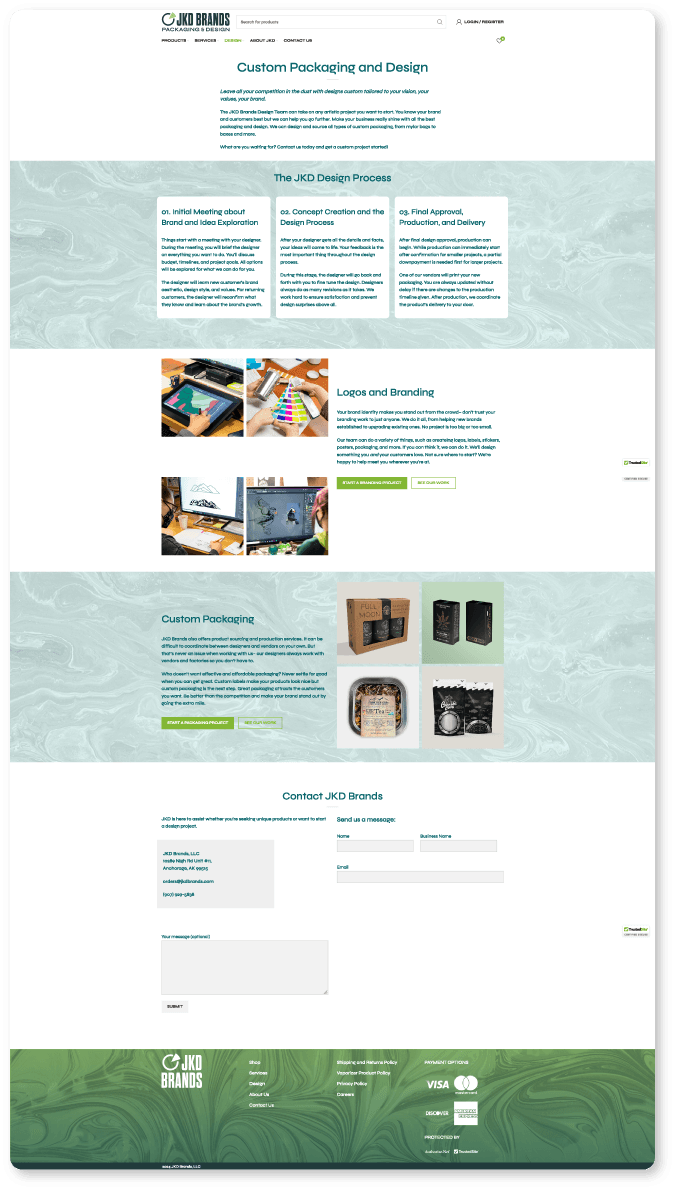
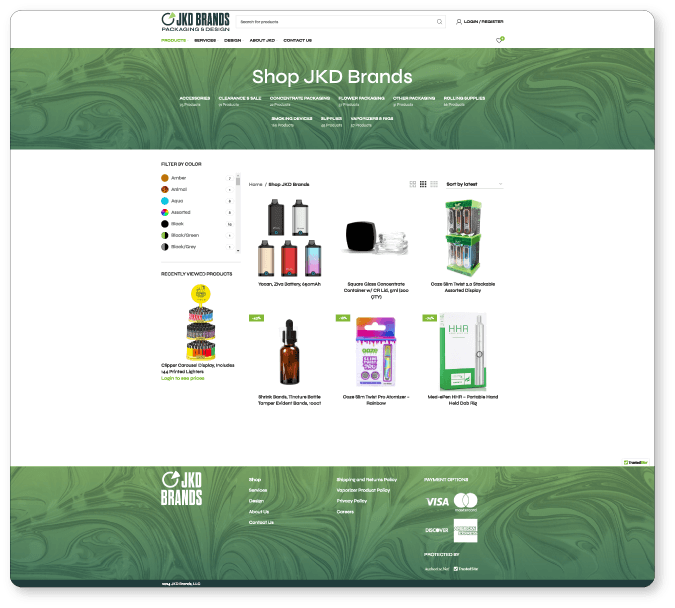
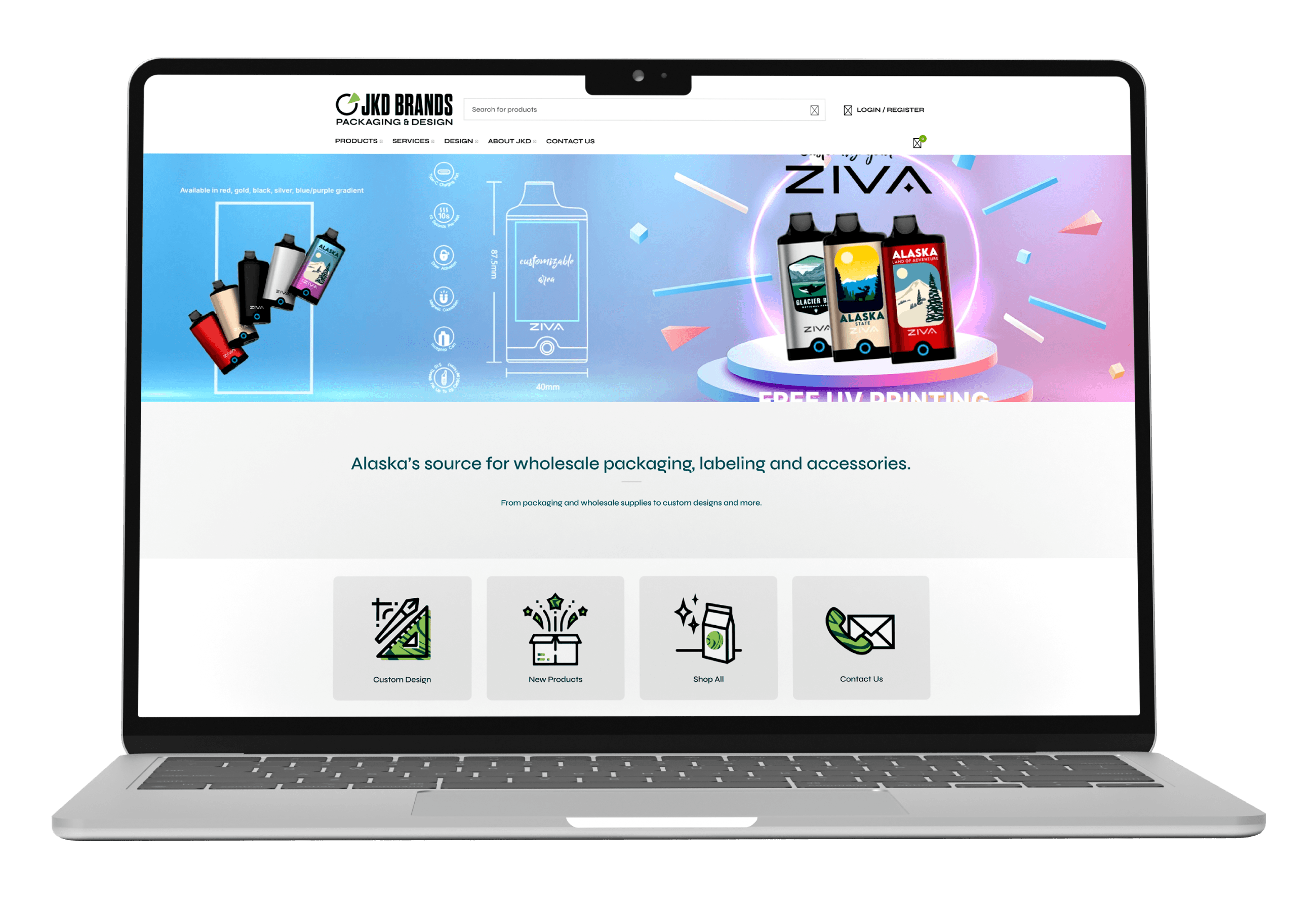
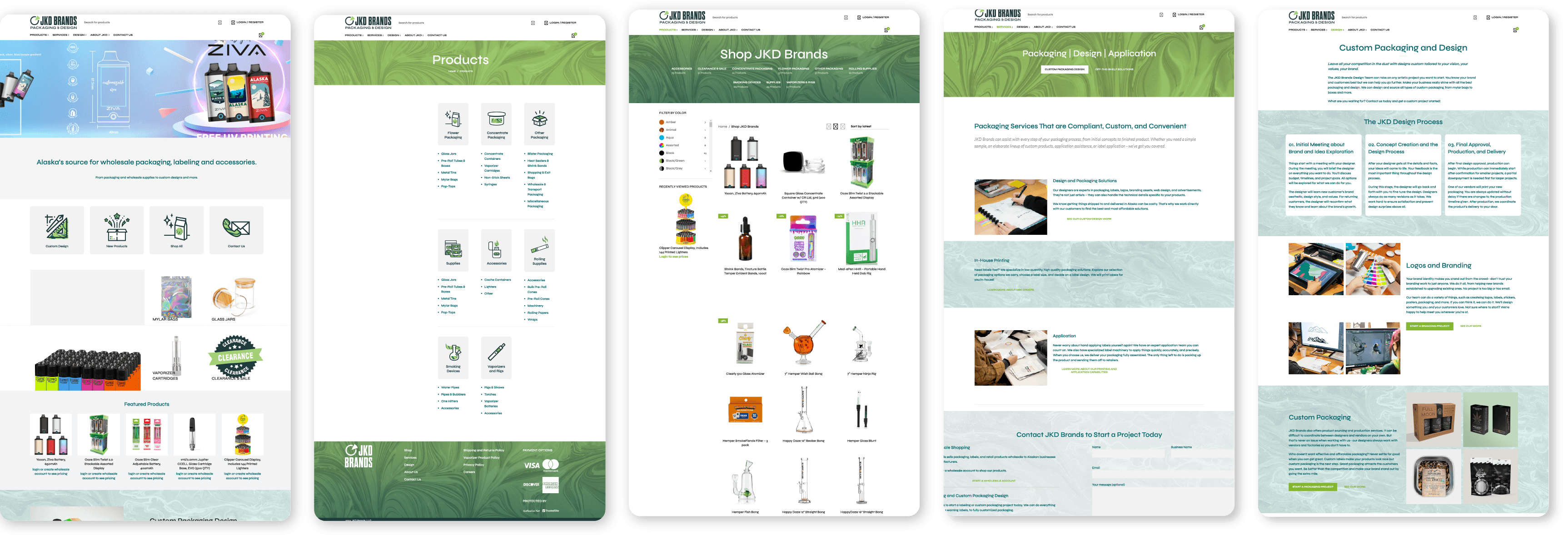
The company is a packaging solutions provider — offering design, sourcing, manufacturing, and logistics for packaging. Historically, however, 85% of its customer base came from the cannabis industry, and this was reflected in its website: the homepage and shop pages were dominated by product listings (lighters, rolling papers, pop tops, batteries), while the company's actual core competencies — packaging design, sourcing, and consultation — were buried and difficult to find.
This created two compounding business problems:
- Narrow market perception. New visitors landing on the site saw a cannabis-adjacent product store, not a packaging services company. Prospective clients outside the cannabis space would leave immediately, assuming the company wasn't relevant to them.
- No new client acquisition. The website functioned purely as a reorder portal for existing offline customers. It had never generated a single inbound inquiry from a new client.
On top of the brand-positioning issue, the site itself suffered from poor UX fundamentals:
- Inconsistent, unclear information architecture with duplicate pages
- Dead-end pages with no way to navigate back
- Visual design inconsistent with brand identity
- Core service offerings had no clear entry point or hierarchy
The business goal behind the redesign: Shift the company's revenue model from product sales to service-led engagements, and diversify the client base beyond cannabis into food, beverage, beauty, wellness, and CBD industries — without alienating the existing customer base who still needed to reorder products easily.
02 / JKD case study
The business transformation
Note: I mapped out the strategic pivot to ensure every design decision aligned with our new revenue goals.
Business Model
BeforeProduct-Oriented B2B E-commerce
AfterIntegrated Service-Driven Platform
Value Prop
BeforeSelling accessories (Lighters, batteries, pop-tops...)
AfterEnd-to-end packaging infrastructure & consultation
Core Audience
Before85% Cannabis industry (mostly local, repeat buyers)
AfterMulti-Industry (Food, Beverage, Beauty, Wellness, CBD, etc.)
Revenue Channel
BeforeOffline clients placing repeat orders online
AfterLead Generation Funnel driving new nationwide enterprise contracts
03 / JKD case study
My role
As the sole designer on the project, I owned the UX/UI design end-to-end, while also acting as project lead — a dual responsibility that shaped how I approached the work:
Project planning & management
Broke down the redesign into phased deliverables, tracked task completion across the backend developer and SEO specialist, surfaced blockers, and reported progress to the owner for approval.
Information architecture & content strategy
Audited and restructured the entire site map; independently authored the first draft of SEO content, then collaborated iteratively with the SEO specialist to align keyword strategy with brand messaging — ensuring SEO optimization never diluted the intended narrative.
UX/UI design
Designed and built every page in Elementor, from wireframes to final visual design.
Technical coordination
Worked closely with the backend developer to plan a parallel-build migration strategy — the new site was built and tested independently while the live site (on the old page builder and old server) continued running uninterrupted, ensuring zero downtime and zero data loss for e-commerce, product, and customer records during the eventual cutover to Elementor and a new SiteGround server.
04 / JKD case study
Legacy website audit
The audit highlighted four areas of friction that restricted business growth.
Misaligned Value Proposition
High-margin services (Sourcing, Design) were deeply buried. The homepage looked like an online headshop, driving non-cannabis clients away instantly.
Broken Navigation & Dead Ends
Structural redundancies, duplicate content, and "trap doors" severely disrupted user flows.
Friction in the Buying Cycle
The site functioned merely as a re-ordering tool for existing brick-and-mortar customers. There was no clear gateway for a new client to initiate a custom project.
Brand Identity Erosion
The visual design looked outdated and unpolished, failing to establish the credibility required for enterprise-level B2B partnerships.
05 / JKD case study
The UX strategy & content framework
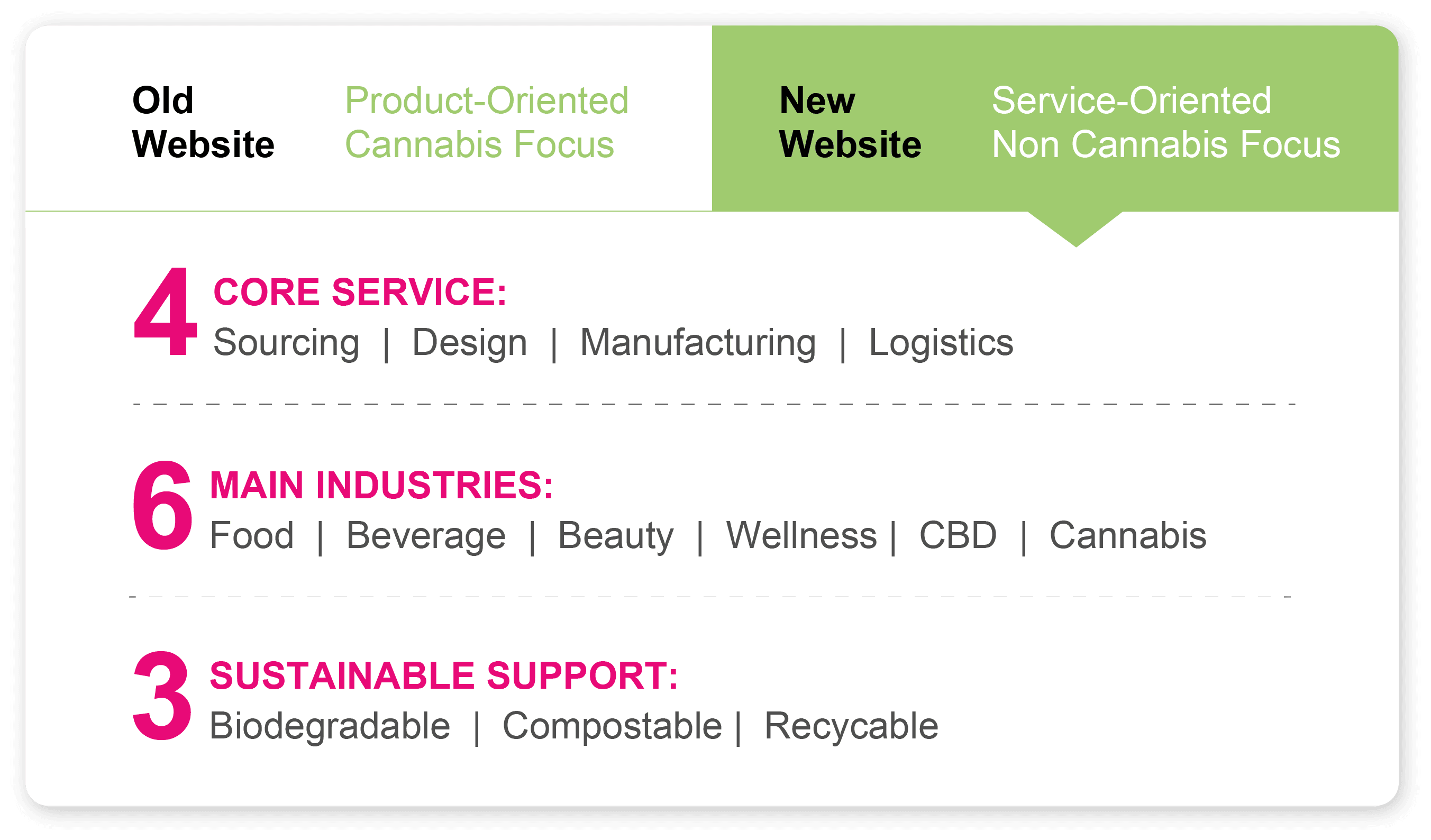
Instead of organizing the site around inventory, I structured it around Customer Needs and Vertical Industries.
Four service pillars
Sourcing
Direct access to global raw materials and innovative structural options.
Design
A tiered design ecosystem: Label Design (In-House Production), Custom Design Projects, and Design Consultation.
Manufacturing
Turning concepts into scalable, physical production.
Logistics
Seamless fulfillment, warehousing, and multi-state distribution.
Six industry pathways
Dedicated entry points help clients find relevant packaging expertise.
Sustainable material choices
Biodegradable · Compostable · Recyclable
06 / JKD case study
Information architecture
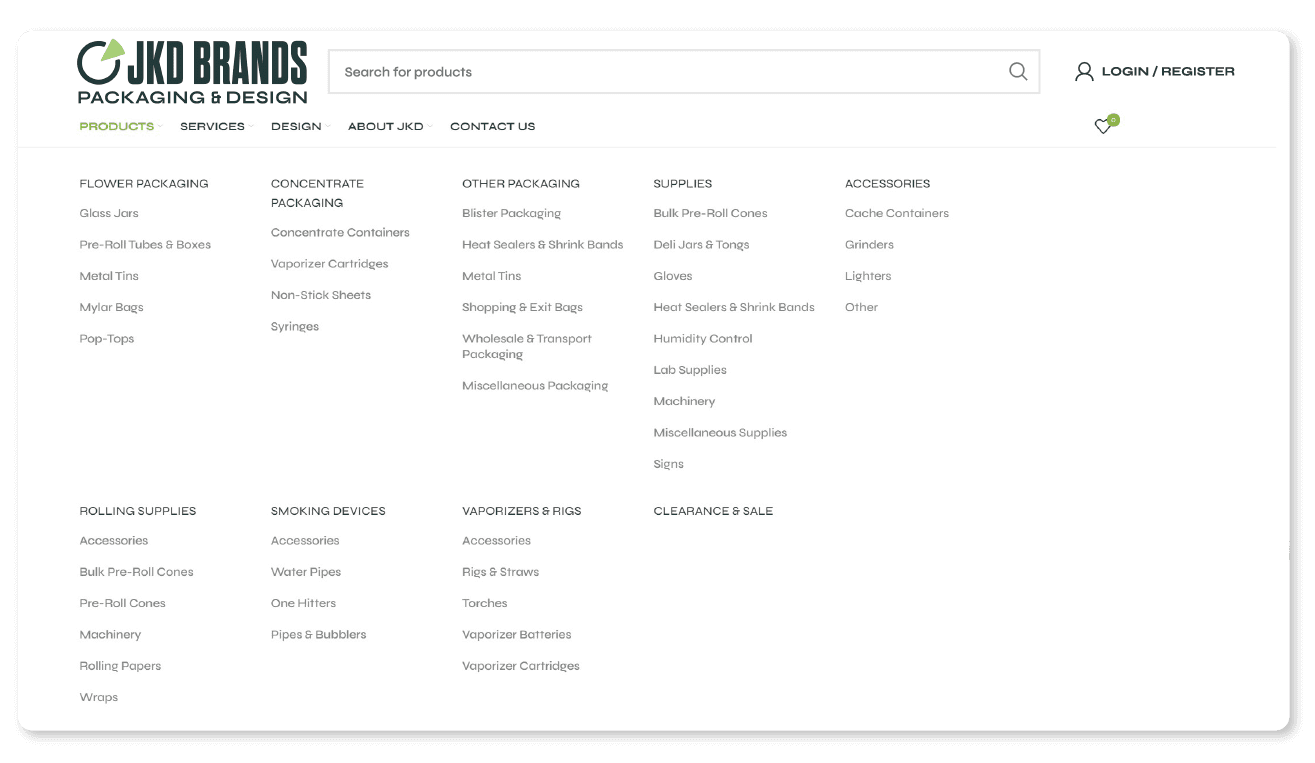
Legacy architecture
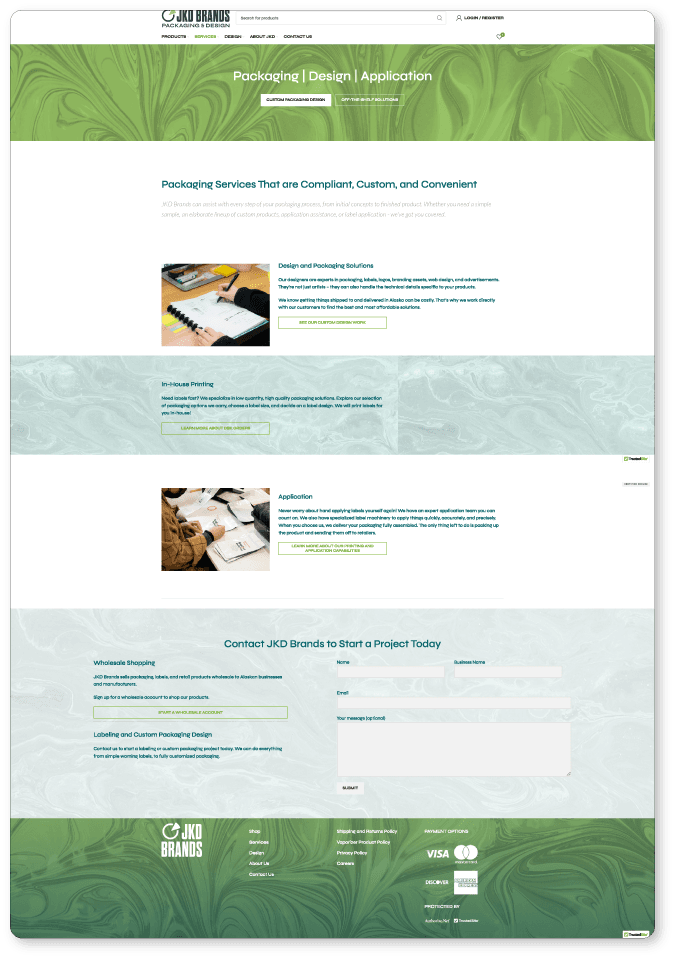
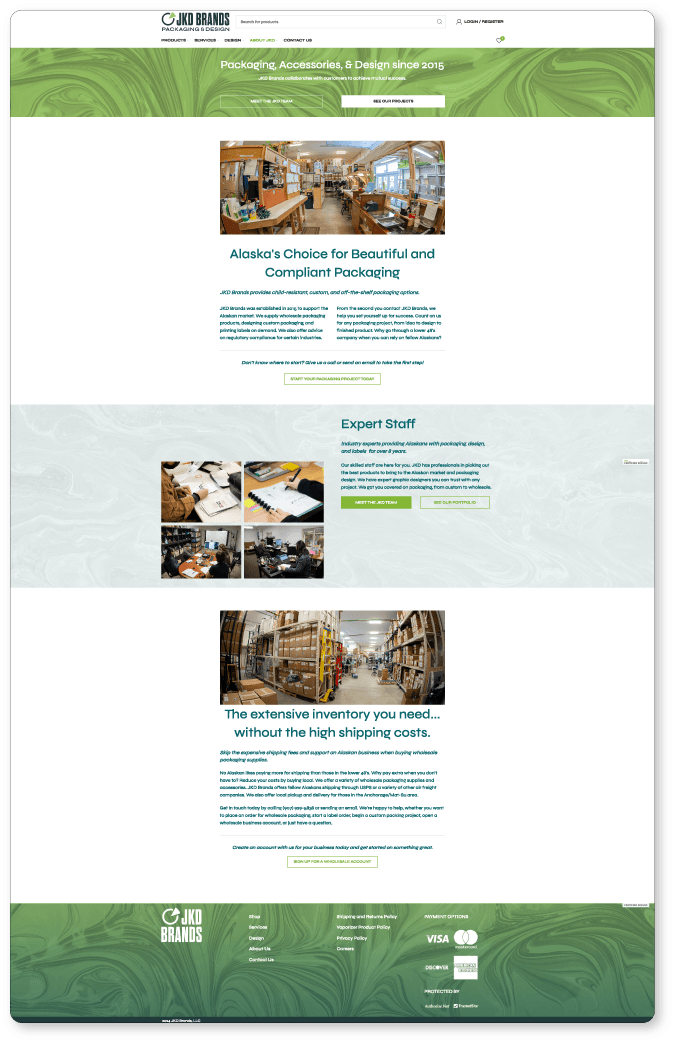
The old site was built like a retail shop, burying our core capabilities and driving non-cannabis clients away.
Products
Flower Packaging · Concentrate Packaging · Rolling Supplies · Smoking Devices · Vaporizers & Rigs · Supplies · Accessories · Clearance & Sale
Services
Custom design · DBK Orders · Printing & Production
Design
Custom Product Pricing · Ours Design Work
About JKD
About Us · Our Team · Careers
Contact Us
Restructured architecture
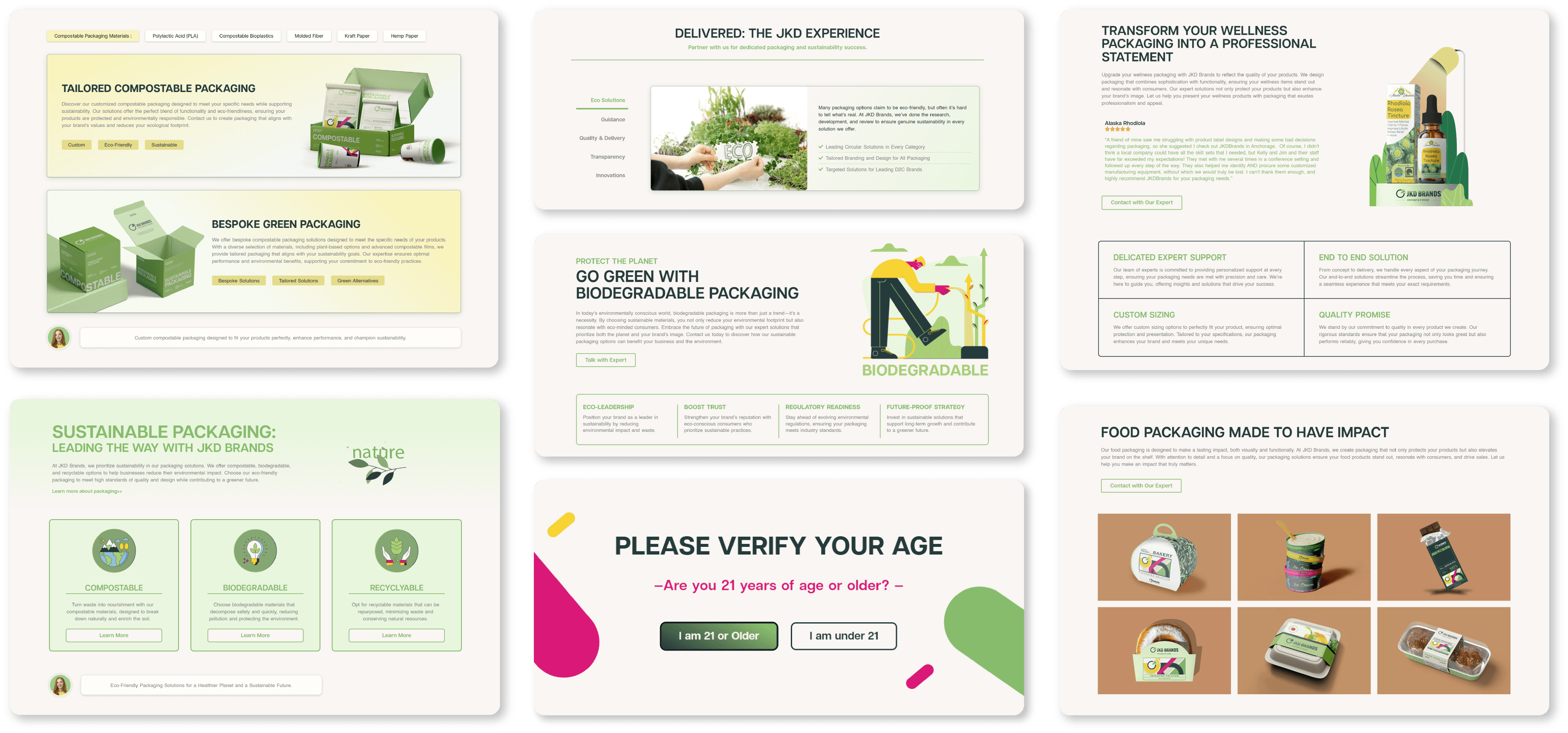
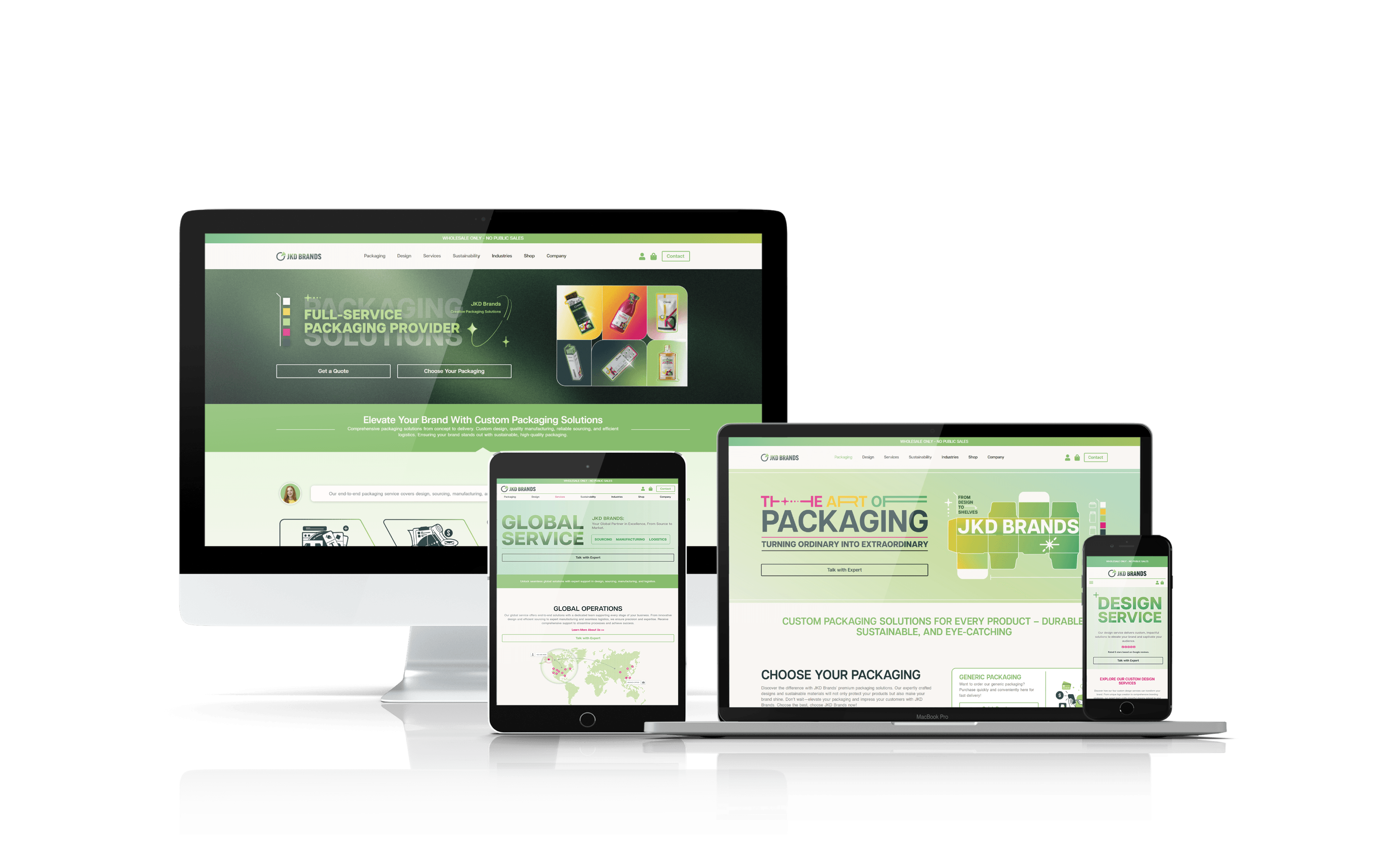
To support our business pivot, I established a service-first hierarchy by moving our 4 core services directly to the main navigation, while creating dedicated entry points for 6 vertical industries—such as Food and Beauty—to de-stigmatize the brand and build instant credibility with mainstream B2B buyers.
Packaging
Categories · Materials · Finishes
Design
Custom Label Template · Custom Design Service · Design Consultation
Service
Sourcing · Manufacturing · Logistics
Sustainability
Compostable · Biodegradable · Recyclable
Industries
Food Industry · Beverage Industry · Beauty Industry · CBD Industry · Wellness Industry · Cannabis Industry
Shop
General Packaging · Supplies · Smoke Shop
Company
About Us · Contact Us · Frequently Q&A
07 / JKD case study
The design & development process
- 01
Discovery & Audit
Audited the existing site and assessed the new tech stack (Elementor + SiteGround) to scope the rebuild.
- 02
Strategy & IA
Rebuilt the sitemap with separate service-first flows for new clients (discover → inquire) and returning customers (reorder).
- 03
Content Strategy
Drafted core messaging first, then aligned with SEO — content-first, keywords-second.
- 04
Design
Wireframed and designed every page solo, shifting the brand from e-commerce-heavy to a professional B2B service look.
- 05
Parallel Development
Built the new site in staging while the live site remained active, coordinating backend data and the inquiry form.
- 06
QA & Cross-Checking
Tested both user paths end-to-end, plus checkout, forms, and content consistency.
- 07
Migration & Launch
Coordinated a single cutover with the backend developer: full product, order, and user data migration to the new server, with zero downtime.
- 08
Post-Launch
Tracked inquiries and page performance to validate the redesign against business goals.
08 / JKD case study
Challenges & design decisions
Repositioning the brand without alienating existing customers
Solution: Rather than removing product pages, I re-prioritized the navigation and homepage hierarchy — services first, but with a clear, unbroken path to the product catalog existing customers relied on.
Migrating platforms and servers with zero tolerance for data loss
Solution: Partnered with the backend developer on a parallel-build approach — building and testing the new site independently before a single coordinated cutover, rather than migrating in place.
Keeping SEO optimization aligned with brand narrative
Solution: Established a "content-first, SEO-second" workflow — I drafted core messaging before SEO refinement began, so keyword optimization enhanced rather than overrode the intended story.